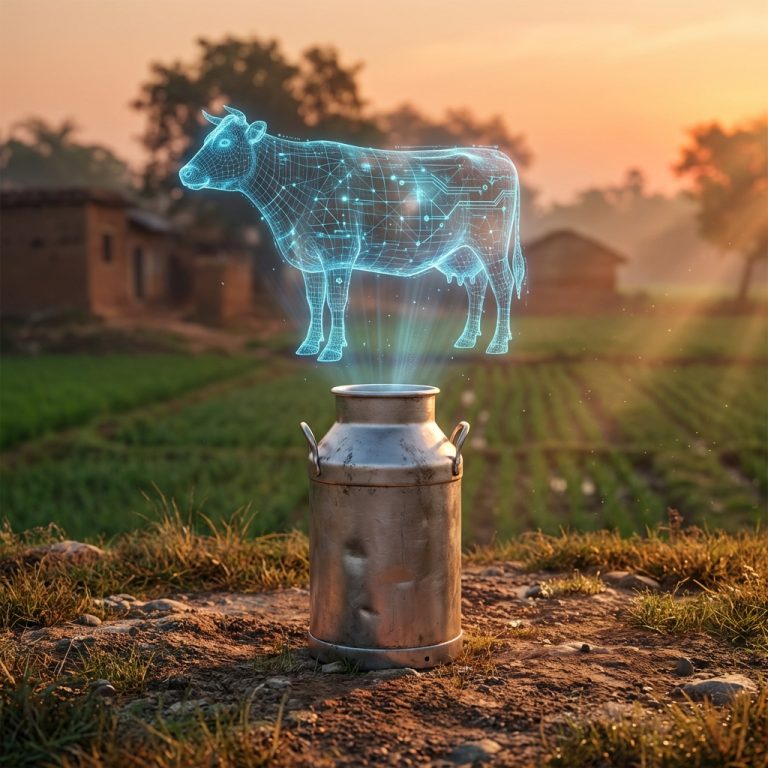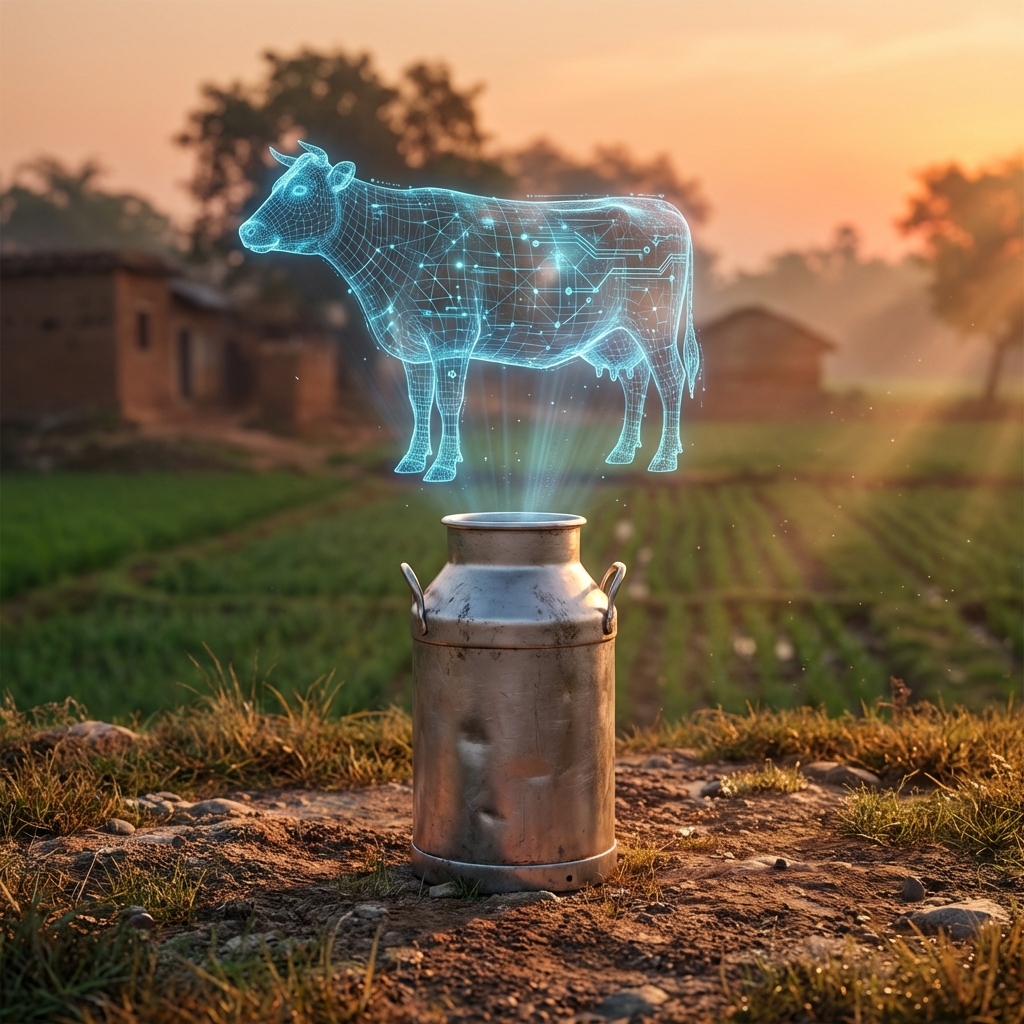
While the tech world obsesses over Generative AI in corporate boardrooms, a far more significant test of the technology is quietly unfolding in the villages of Gujarat.
Amul, the global dairy giant, has officially launched Amul AI, featuring a vernacular assistant named Sarlaben. This isn’t a pilot program in a controlled lab; it is a massive, production-grade deployment serving 3.6 million women milk producers.
Here is why this matters for anyone tracking the integration of AI into legacy industries.
The Data Moat
Most agri-tech startups face a “cold start” problem—they have the algorithms but lack the data. Amul flipped the script. They built their AI on a massive, proprietary foundation that no competitor can easily replicate:
- 50 years of cooperative historical data.
- 2 billion annual milk procurement transactions.
- 30 million cattle records, including specific health and breeding histories.
- Real-time integration with automatic milk collection systems.
This isn’t just a generic wrapper around a Large Language Model. It is a purpose-built engine trained on decades of operational reality.
Solving the Last-Mile Problem
The brilliance of this rollout lies in its User Experience (UX) and accessibility.
Rural farmers often face a digital divide where complex apps fail due to literacy or connectivity barriers. Sarlaben bridges this gap by leveraging the government’s Bhashini multilingual framework.
The system adopts a voice-first approach, understanding local dialects (starting with Gujarati) and is accessible not just via smartphones, but also through voice calls on standard feature phones. This ensures the tech reaches the user, rather than demanding the user upgrade their tech.
The Business Case: Fixing Productivity
India presents a unique paradox: it is the world’s largest milk producer by volume, yet the per-animal yield remains low compared to global standards. The bottleneck has rarely been effort; it has been information.
By giving farmers instant, round-the-clock access to personalized veterinary advice, disease history, and fodder mapping (using ISRO satellite imagery), Amul is using AI to dismantle information asymmetry.
The Takeaway
For founders and tech leaders, the lesson here is clear: Distribution and Data are the ultimate leverage.
Amul didn’t wait for a third-party disruptor to modernize their supply chain. They leveraged their existing cooperative network—the “original” social network—to deploy a solution that is technically sophisticated but culturally accessible.
This is what “White Revolution 2.0” looks like: not just new machinery, but intelligent, data-driven decisions at the grassroots level.