The conversation around Artificial Intelligence is shifting. For the last two years, the business world has been obsessed with generative AI—models that can write, create images, and summarize text. But a significant evolution is happening right now, driven largely by China’s technology heavyweights: Alibaba, Tencent, and Huawei.
They are pivoting aggressively toward Agentic AI.
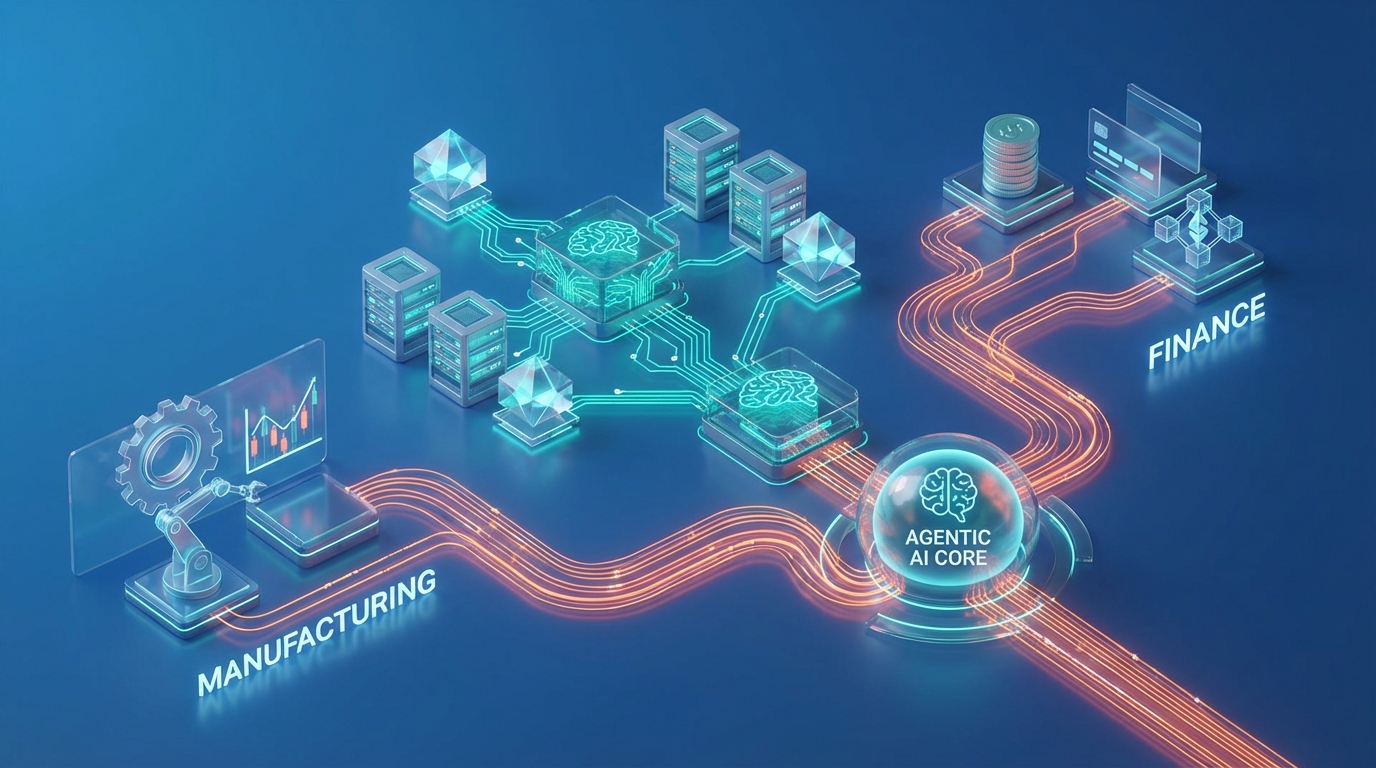
For founders and business leaders, the distinction is critical. While a standard Large Language Model (LLM) waits for you to ask a question, an AI Agent is designed to execute multi-step tasks autonomously. It doesn’t just draft an email; it can interface with your CRM, update records, and schedule the meeting without constant human hand-holding.
Alibaba’s Play: Open Source as a Strategy
Alibaba is taking a page from the open-source playbook to capture developer mindshare. Their strategy revolves around the Qwen model family. Rather than keeping their tech behind a closed door, they are releasing robust developer tools and agent frameworks (like Qwen-Agent) to the public.
The goal is straightforward: turn their ecosystem into the default operating system for business automation. By allowing third-party developers to build autonomous systems using Alibaba’s tools, they are positioning Qwen to handle complex workflows in finance, logistics, and customer support.
Huawei and Tencent: The Industrial Approach
While Alibaba focuses on the software layer, Huawei is going vertical. Through its Pangu family of models, Huawei is embedding agents directly into hardware stacks designed for heavy industries—telecommunications, energy, and manufacturing.
This isn’t just about chatbots for customer service; it is about predictive maintenance agents that can autonomously reallocate resources in a power grid or optimize a factory floor with minimal human oversight. Tencent is mirroring this with “scenario-based AI,” offering SaaS-style tools designed for specific business outcomes rather than general experimentation.
The Global Reality Check
Despite the sophistication of these tools, adoption in Western markets (Europe and the US) remains cautious. Geopolitical friction, data governance regulations, and hardware constraints (specifically regarding access to advanced Western GPUs) have created a split ecosystem.
However, the models themselves—particularly Alibaba’s Qwen—are accessible via open-source licenses. This means Western researchers and agile companies can still experiment with the brains of these Chinese agents, even if they aren’t utilizing the Chinese cloud infrastructure to run them.
Why It Matters for Your Business
The move by these giants signals where the market is heading globally. We are moving away from AI as a novelty or a creative assistant, and toward AI as a functional operator within the enterprise. Whether you utilize Western stacks like Microsoft and OpenAI, or experiment with Eastern open-source models, the future of business automation is autonomous, agentic, and action-oriented.