The conversation around Artificial Intelligence is shifting. For the last two years, the focus has been on Generative AI—systems that can write, code, and create.
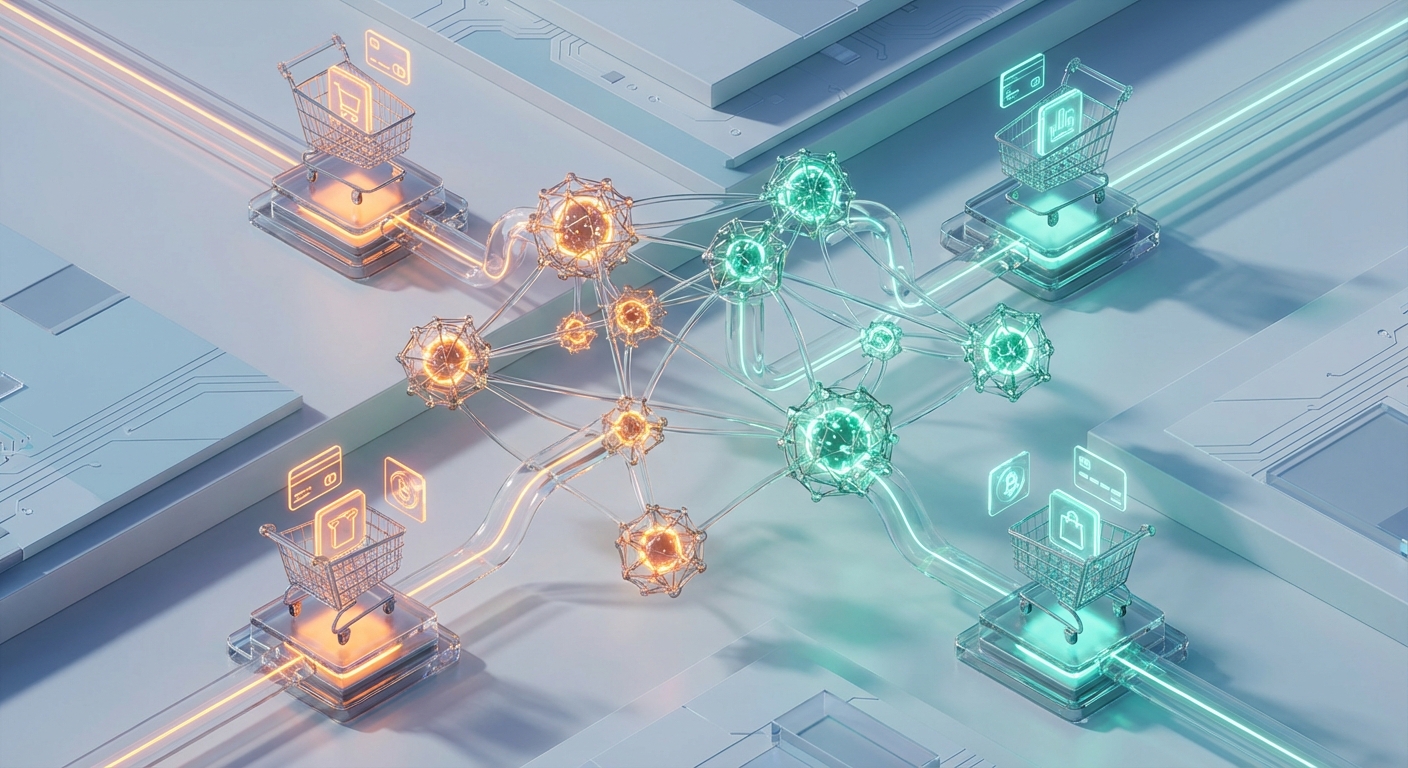
Now, the industry is pivoting hard toward Agentic AI. These aren’t just chatbots that answer questions; they are autonomous agents capable of executing multi-step tasks, from product discovery all the way to payment.
While Western firms are currently doubling down on foundational models and cross-platform compatibility, a different—and perhaps more commercially aggressive—strategy is emerging from China’s technology giants. They are racing to dominate through commerce integration, a move that offers a glimpse into the future of automated enterprise.
The Strategy Divergence: Brains vs. Hands
To put it simply: Western tech is building better brains, while Chinese tech is building better hands.
Giants like Alibaba, Tencent, and ByteDance are rapidly upgrading their platforms to support “agentic commerce.” This marks a decisive move away from passive conversational tools toward active agents that complete entire transaction cycles.
Take Alibaba, for example. Just last week, they upgraded their Qwen chatbot to handle direct transactions. This isn’t a simple link-out; the AI agent connects deeply within the ecosystem (Taobao, Alipay, Amap) to perform over 400 core digital tasks. Users can compare personalized recommendations and finalize payments without ever leaving the chat interface.
The “Super App” Advantage
This rapid deployment highlights a structural advantage in the Chinese market: the Super App ecosystem.
Because platforms like WeChat and Douyin (TikTok’s Chinese counterpart) already integrate messaging, payments, and e-commerce, deploying Agentic AI is a matter of connecting existing pipes rather than building new ones.
- ByteDance upgraded its Doubao chatbot to autonomously handle ticket bookings.
- Tencent has signaled that AI agents will become core components of WeChat, leveraging its billion-user base.
As Charlie Dai from Forrester notes, success in this phase depends on deep integration. Western companies, bound by stricter privacy regulations and fragmented data environments, face a steeper climb to achieve this level of seamless execution.
Why This Matters for Business Leaders
For founders and enterprise decision-makers, this isn’t just tech news—it’s a forecast of changing market dynamics.
Agentic AI is moving from auxiliary support to autonomous action. Industry experts predict that multi-agent systems will soon extend from consumer services into organizational production. A report by the Global Times suggests we could see the first AI agent with over 300 million monthly active users by 2026, effectively becoming an indispensable digital assistant for daily life.
The economic implications are massive. A recent McKinsey study estimates that AI agents could generate over $1 trillion in economic value for US businesses by 2030 by streamlining consumer decision-making.
The Bottom Line
We are witnessing a fundamental split in deployment strategies. The US and Europe are prioritizing global scalability and governance, while China creates closed-loop, high-efficiency transactional ecosystems.
As these autonomous systems mature, they will reshape customer acquisition costs and platform economics globally. The question for modern businesses is no longer “How can I use AI to create content?” but rather, “How can I prepare my business for an economy where AI agents are the ones making the purchases?”