We’ve spent the last few years amazed by AI that can write emails and generate images. But the next massive shift isn’t happening on a screen—it’s happening on the factory floor.
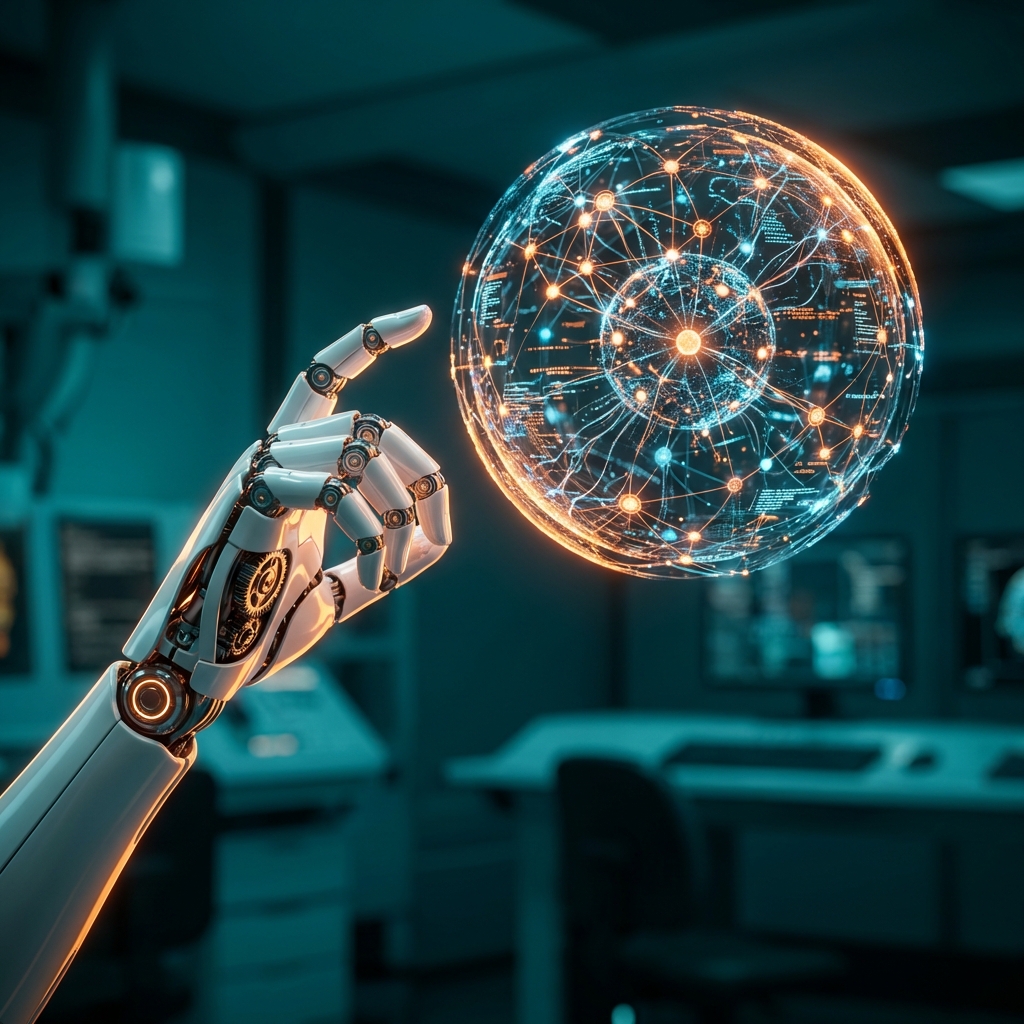
Alibaba has officially entered the race, and they aren’t just launching another text generator. They have unveiled **RynnBrain**, an open-source model designed to give robots the ability to perceive, think, and act in the physical world.
### **Not Just Code—Physical Action**
Unlike traditional robots that follow strict, pre-programmed instructions, RynnBrain allows machines to “see” their environment and make decisions in real-time. Think of it as the difference between a train stuck on a track and a car intelligently navigating through traffic.
In recent demos, robots powered by this tech were identifying fruits and placing them delicately into baskets. While this sounds simple to a human, for a machine, it requires a complex mix of vision, logical processing, and precise motor control—technically known as **Vision-Language-Action (VLA)**.
### **The Strategic Power Play: Going Open-Source**
Here is where it gets interesting for business leaders and founders. While tech giants like Nvidia, Google DeepMind, and Tesla are building proprietary “walled gardens” for their robotics AI, Alibaba is taking a different route: **Open-Source.**
By making RynnBrain free for developers, they are betting on rapid adoption. It’s a classic strategy: if everyone builds their tools on your foundation, you effectively become the industry standard. This mirrors their success with the Qwen language models and positions them to capture market share quickly.
### **Why Now? The Economic Necessity**
This isn’t just about innovation; it’s about economic survival. With aging populations and severe labor shortages hitting global markets—especially in manufacturing and logistics—the demand for “smart” labor is skyrocketing.
* **The Projection:** UBS estimates there will be **2 million humanoid robots** in workplaces by 2035.
* **The Opportunity:** This represents a potential **$1.7 trillion market** by mid-century.
### **The “Physical” Risk Factor**
However, moving AI from software to hardware introduces high stakes. If a chatbot makes a mistake, you get a typo or a hallucination. If a physical AI makes a mistake on a factory floor, you face broken inventory, safety hazards, and operational shutdowns.
As we shift from simple automation to **autonomous decision-making**, governance becomes the new infrastructure. Business owners looking to adopt this tech need to focus less on “Can we deploy this?” and more on “How do we govern this safely?”
### **The Bottom Line**
The era of physical AI is moving from research labs to industrial timelines faster than anticipated. With Alibaba pushing open access, the barrier to entry for advanced robotics just dropped significantly. The question is no longer *if* intelligent robots will enter your industry, but *how quickly* you can adapt when they do.