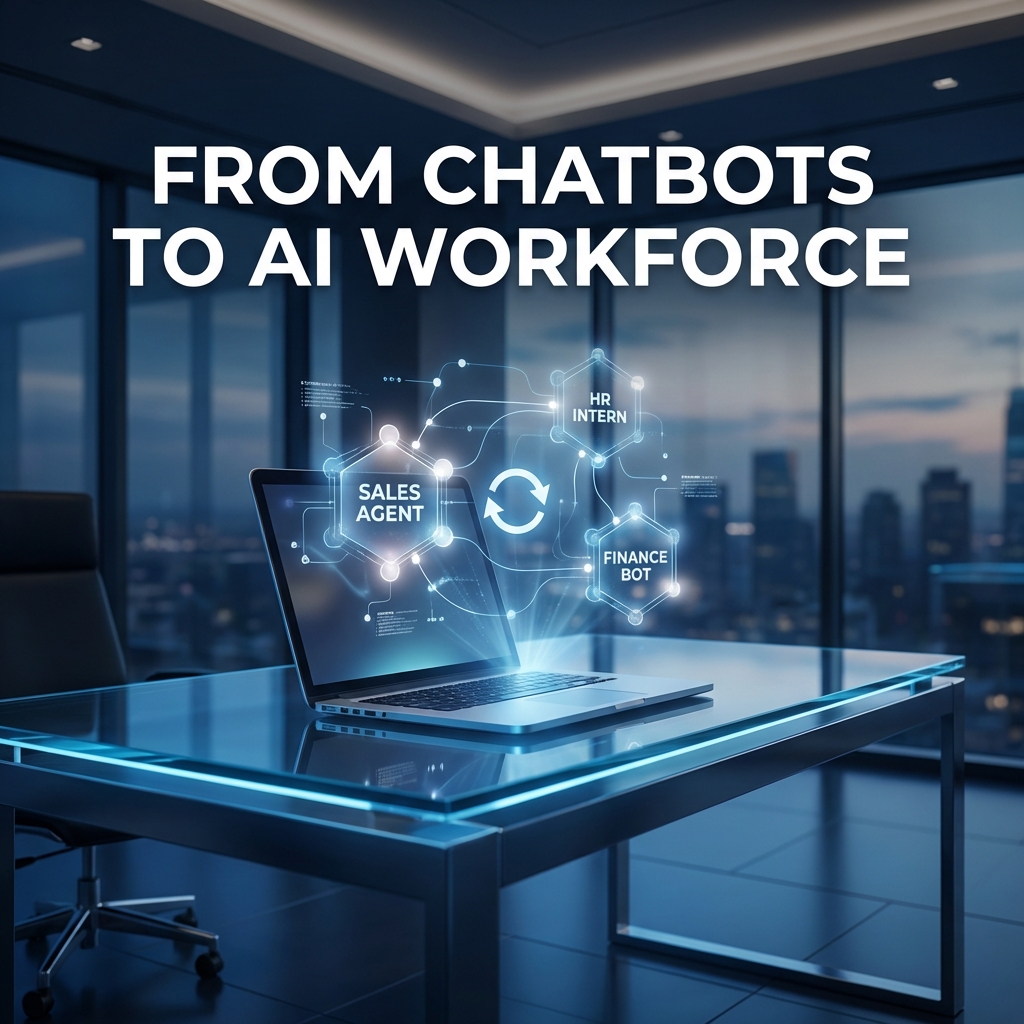
Remember when AI was just a fascinating experiment? A chatbot here to draft an email, a tool there to summarize a meeting. For most businesses, that phase is officially ending.
At Prime IT Sewa, we have been closely monitoring the shift in the enterprise landscape. The industry is moving away from general-purpose “pilots” and toward something far more powerful: AI Infrastructure.
From Chatbots to “AI Interns”
The days of relying on a single, generic chatbot are numbered. The new model relies on fleets of task-specific AI Agents. Think of these agents not as software, but as “digital interns.”
You wouldn’t hire a marketing intern to review a complex legal contract, so why expect one AI model to handle every task in your company? Instead, successful businesses are deploying specialized agents accountable for specific slices of work:
- HR Teams are using agents tuned specifically to screen CVs against recruitment criteria.
- Legal Departments utilize agents configured solely to flag contract violations.
- Sales Teams rely on agents integrated directly into CRMs to manage pipeline data.
The Numbers Don’t Lie
Moving from a general chatbot to specialized agents isn’t just a technical upgrade; it’s a financial one. Early adopters are already reporting significant gains.
Take the fintech company Payhawk, for example. By deploying an “agentic platform” across finance and customer support, they didn’t just save time—they transformed their operations. They reported an 80% reduction in security investigation time and a 75% cut in processing costs, all while maintaining 98% data accuracy.
This is where the real value lies: not in the raw power of the model, but in its ability to integrate with your existing workflows and data.
Business Leaders in the Driver’s Seat
Here is perhaps the most critical update for founders and department heads: You are taking control.
Ownership of AI is shifting from the engineering team to business functions. In the near future, Heads of Sales, Finance, and HR will be expected to configure their own agents. The technology is evolving to become “low-code” or “no-code,” meaning you won’t need a developer for every adjustment. Managing an AI agent will soon be a core operational competency, just like managing a spreadsheet or a project timeline.
The Trap of Fragmentation
However, a word of caution. As you rush to adopt these tools, you risk “fragmentation”—having ten different agents on ten different platforms, leading to duplicate costs and security headaches.
The solution is consolidation. Evidence suggests that businesses using a centralized platform deploy agents twice as fast and maintain better control over spending. It allows your “digital interns” to work together as a team rather than in silos.
Looking Ahead
Industry projections suggest that by 2026, 40% of enterprise software will incorporate these task-specific agents. The demand is going to outstrip the supply of engineers who can build them from scratch.
The winners will be the organizations that start building their “agent libraries” today using templates and proven playbooks. At Prime IT Sewa, we are ready to help you navigate this transition from novelty to infrastructure.