Good Business in Nepal – Proven Ideas, Costs, and Steps
If you are searching for a good business in nepal that actually works, you likely want something practical, affordable, and quick to start. This guide gives you validated ideas, real cost ranges, permits, and step-by-step actions tailored to Nepali demand so you can start with confidence.
What makes a good business in Nepal
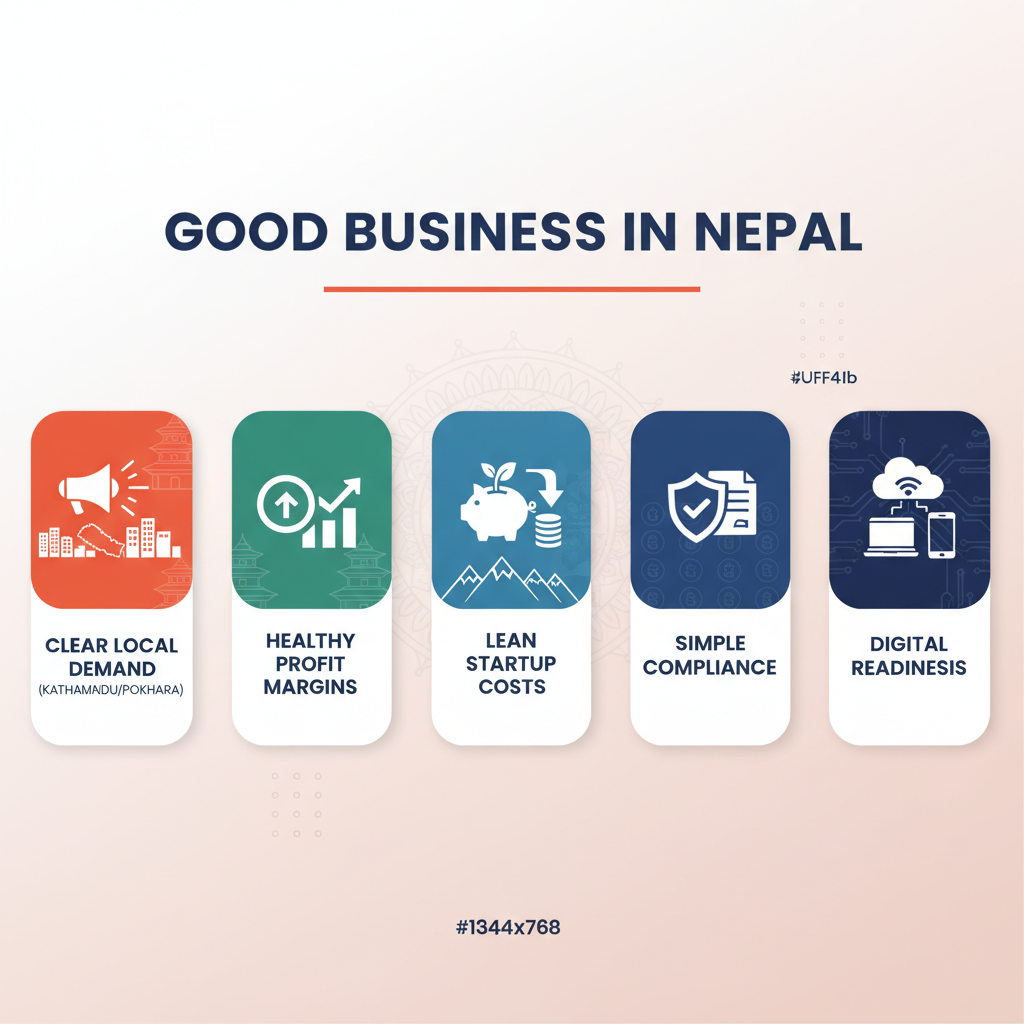
- Clear local demand: Solve daily problems in cities like Kathmandu, Pokhara, Chitwan, Biratnagar, Butwal, and emerging towns.
- Healthy margins: Aim for 25 to 60 percent gross margin to cover rent, salaries, tax, and marketing.
- Lean startup cost: Start small, validate fast, then scale using profits.
- Simple compliance: Pick a model with straightforward licensing and permits.
- Digital readiness: Use a website, social media, and QR payments to acquire customers at low cost.
12 proven ideas that fit the Nepali market
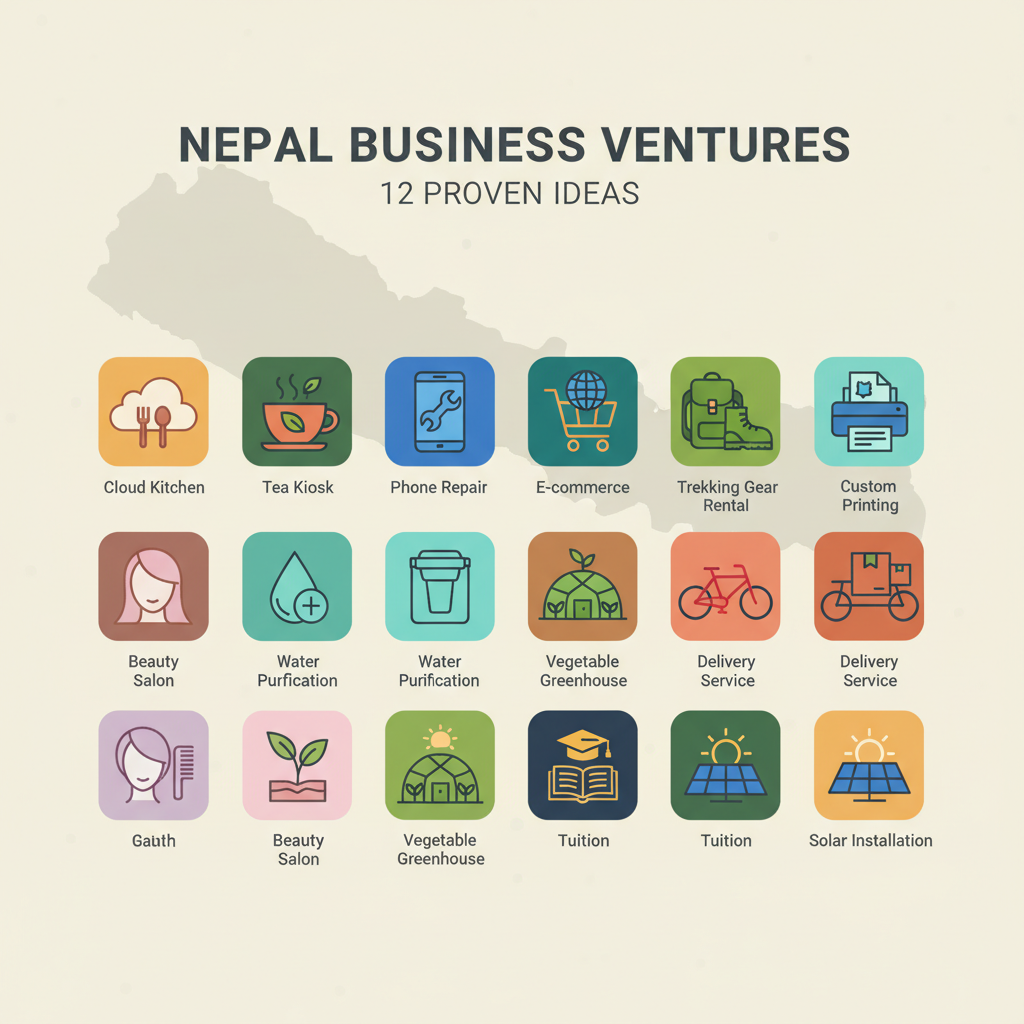
Below are business models with realistic startup budgets, typical monthly revenue potential, and quick notes on demand. Numbers are indicative and vary by location and execution.
- Cloud kitchen or home tiffin – NPR 150,000 to 600,000. Serve office lunches and hostel students. High repeat orders, manageable from home.
- Tea and coffee kiosk – NPR 200,000 to 700,000. Small footprint near schools, offices, or bus stops. Add snacks to lift margins.
- Phone repair and pre-owned sales – NPR 300,000 to 1,000,000. Consistent demand, offer trade-ins and accessories for upsell.
- Niche e-commerce store – NPR 150,000 to 500,000. Focus on one category like baby products, fitness gear, or kitchen tools. Use COD and fast delivery.
- Trekking gear rental – NPR 400,000 to 1,200,000. Target Thamel, Lakeside, and trail gateways. Seasonal but lucrative if inventory is quality.
- Custom printing and branding – NPR 300,000 to 900,000. T-shirts, mugs, signage for SMEs, schools, and events. B2B repeats stabilize cash flow.
- Beauty salon or men’s grooming – NPR 400,000 to 1,200,000. Training and hygiene are key. Sell care products for extra margin.
- Water purification and refill station – NPR 800,000 to 1,800,000. Recurring household demand. Compliance and maintenance are crucial.
- Vegetable greenhouse micro-farm – NPR 300,000 to 900,000. Consistent demand from hotels and retailers. Contract selling reduces risk.
- Last-mile delivery or courier niche – NPR 500,000 to 1,500,000. Partner with local e-commerce stores; focus on reliability and tracking.
- Tuition, skill training, or coaching – NPR 150,000 to 600,000. Test hybrid classes and micro-courses. Results and referrals drive growth.
- Solar sales and installation – NPR 700,000 to 2,000,000. Rising demand for backup power. Offer AMC packages for recurring revenue.
Quick framework: is it a good business in nepal for you
- Demand proof: 20 to 30 interviews + 50 to 100 pre-orders or signups.
- Unit economics: Contribution margin per order above 25 percent after delivery and packaging.
- Capital runway: 6 months of expenses in hand or accessible.
- Time to break-even: Target within 6 to 12 months.
Essential permits and registration in Nepal
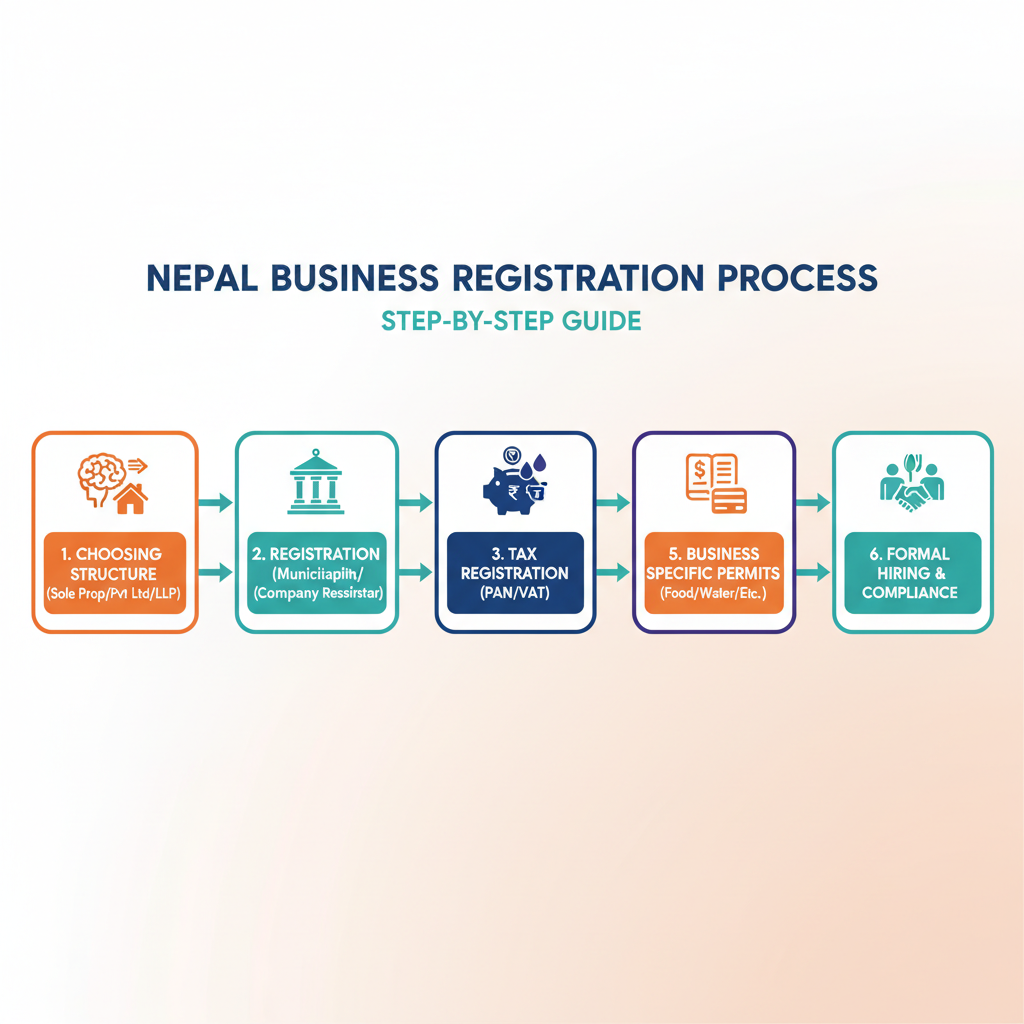
Compliance is simple if you follow a clear sequence:
- Choose structure: Sole Proprietorship or Private Limited Company.
- Register the business:
- Proprietorship: at your Municipality or Ward office for a trade license.
- Private Limited: at the Office of Company Registrar, then obtain a company certificate.
- Tax registration: Apply for PAN at the Inland Revenue Office. Register for VAT if your business model or turnover requires it.
- Sector permits: For food, water, health, or education, get relevant quality and hygiene approvals as required by local authorities.
- Open a business bank account and enable QR payments via Fonepay, eSewa, or Khalti.
- Hire formally: Maintain basic HR records and consider Social Security Fund enrollment when applicable.
Startup costs to plan upfront
- Setup: Registration, rent deposit, interiors, basic furniture.
- Equipment: Machines, tools, POS, packaging, safety gear.
- Inventory: Initial stock sized for 2 to 4 weeks of sales.
- Operations: Utilities, internet, software subscriptions, delivery.
- Marketing: Branding, website, content, local ads, and offers.
- Contingency: 10 to 15 percent for shocks and delays.
Marketing that works in Nepal

- Google Business Profile: Rank on Maps for local intent keywords within your city and niche.
- Short videos: TikTok, Facebook Reels, and Instagram highlight outcomes, prices, and customer reactions.
- Website that converts: Clear offers, social proof, WhatsApp and Viber click-to-chat, and visible QR payments.
- Referral engine: Give rewards for reviews and referrals. Pair with festival offers and local events.
- Remarketing: Retarget site visitors and message leads with limited-time bundles.
If you want a dependable partner to set this up properly, Prime IT Sewa is a one-stop solution for branding, websites, AI automation, marketing, systems, and growth consulting trusted by smart Nepali entrepreneurs.
Pricing and margins benchmarks
- Food and beverage: 55 to 70 percent markup on ingredients; aim for 20 to 35 percent net after rent and staff.
- Retail accessories: 30 to 100 percent markup depending on category and seasonality.
- Services: Time-based billing with 40 to 70 percent gross margin. Productize high-demand services for scale.
Common mistakes to avoid
- Signing a long lease before validating demand with paid orders.
- Buying too much inventory, especially sizes and colors that move slowly.
- Skipping bookkeeping and tax filings, which leads to penalties.
- Ignoring customer feedback and reviews for rapid improvements.
- Relying only on one channel instead of a simple omnichannel mix.
Action plan: 10 steps to launch in 30 days
- Pick one idea and one customer segment.
- Run 20 interviews and collect 50 pre-orders or signups.
- Estimate unit economics and monthly break-even.
- Register the business and get PAN.
- Set up a simple website and Google Business Profile.
- Enable QR payments and COD as needed.
- Procure minimal viable equipment and inventory.
- Publish 10 social posts and 3 short videos showing outcomes and prices.
- Launch an opening offer for the first 100 customers.
- Track revenue, margins, and feedback weekly, then refine.
FAQs
What is the minimum budget to start a good business in nepal?
For lean models like tiffin, tuition, or a niche online store, you can begin from NPR 150,000 to 400,000 and scale as cash flow improves.
Which city is best to start?
Start where you have access to suppliers and your first 100 customers. Kathmandu and Pokhara offer density; secondary cities often have lower rent and less competition.
Is online business better than offline?
Hybrid wins. Keep a small physical or pickup point and use online for discovery, ordering, and payments to boost trust and convenience.
Which taxes apply to small businesses?
PAN is required. VAT applies based on your category and turnover. Keep basic accounts and consult a local tax professional.
How fast can I break even?
With validated demand and disciplined costs, many small businesses can reach break-even in 6 to 12 months.
Final note
A good business in nepal is one you can validate quickly, operate efficiently, and scale with systems. Start small, make customers happy, and let the numbers guide your next move.